
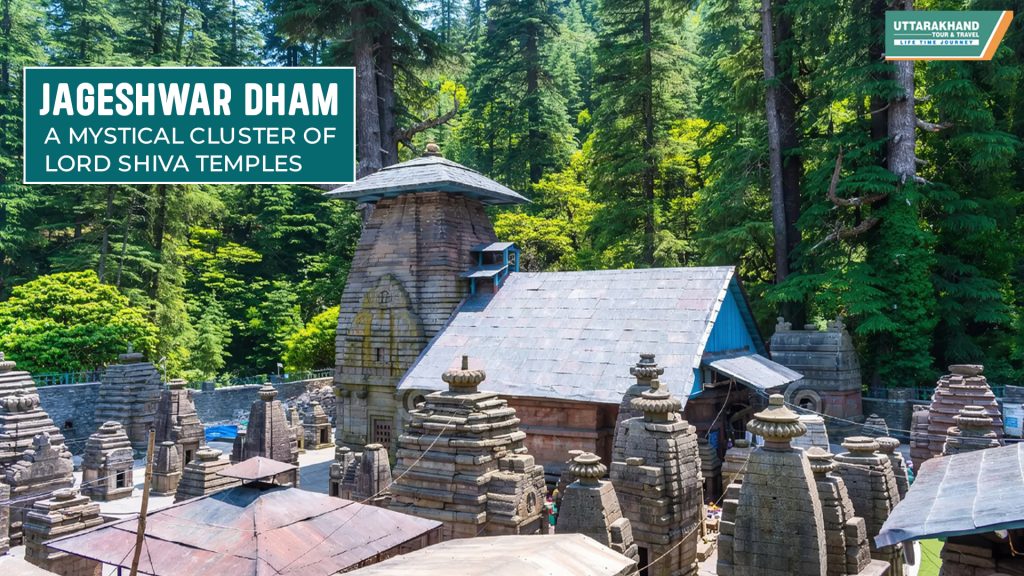
Jageshwar Dham is a temple complex with 125 temples and 174 sculptures. The temple is located on the bank of Jata Ganga at an altitude of 1870 meters in Almora District in Uttarakhand State, surrounded by deodar trees. According to Hindu mythology, the belief behind this temple is that Lord Shiva and Sapta rishi did meditation (Tapasya), and this place had become so powerful that any wish for which a human asks, good or bad, is granted. But later, in the 8th century, Adi Shankaracharya did meditation before leaving for Kedarnath Dham and made this temple’s power only for good wishes that do not harm any human.
The various temples in the Jageshwar Mandir complex include the Jagnath temple, Mrityunjay temple, Hanuman temple, Surya temple, Neel Kanth temple, Navagrahas temple, Pushti Mata temple, Lakulisa temple, Kedarnath temple, Navadurga temple, Batuk Bhairav temple, and many more. There is a Brahma Kund in the Jageshwar Dham temple complex where one can take a Snana (ritual bath). The Archaeological Survey of India (ASI) has established a museum near the Jageshwar Dahm temple. According to the ASI information available on the site, the temple was built post-Gupta and pre-medieval era and is 2500 years old.
The mesmerizing ambiance of Jageshwar Temple is quite suitable for meditation. Many devotees visit this temple to seek the blessings of Lord Shiva.
The river flows close to important pilgrimage routes like the Adi Kailash Yatra route, which attracts devotees who seek spiritual experiences in the Himalayas.
The Sacred Temple Complex
The Jageshwar Temple Complex has more than 100 ancient stone temples, making it one of the biggest complexes of Shiva temples in India. The construction of these temples dates back to between the 7th and 12th centuries under Katyuri and Chand rule.
The main temple in the Jageshwar Temple Complex is of Lord Jageshwar, a manifestation of Lord Shiva. Other temples in the complex are of different gods and goddesses, such as Mahamrityunjaya, Dandeshwar, and Kedareshwar. Each of the temples has a special importance of its own, which creates an ambience of spirituality beyond explanation.
The architecture of the temples in the Jageshwar Temple Complex depicts early North Indian Nagara style architecture.
Mythological Significance
The importance of Jageshwar Dham in Hindu mythology cannot be ignored. It is believed that this holy place is one of those where Lord Shiva chose to meditate. Some even believe that Jageshwar is one of the 12 Jyotirlingas, though not all believe in this.
It is believed that in ancient times, the region was a sacred forest where sages performed rigorous penance to seek Lord Shiva’s blessings. Lord Shiva, pleased by their penance, chose to appear in this region, making it a sacred place.
The presence of the sacred Jata Ganga river flowing nearby adds to the divine presence of the place. Devotees often take a holy dip in the river before offering their prayers.
Architectural Marvel
One of the most striking features of Jageshwar Temple Complex is its ancient architecture. The temples are built using local stone, and they have high curved towers called Shikharas, intricate carvings, and beautifully decorated doorways.
The Mahamrityunjaya Temple is particularly famous for a unique Shiva lingam with a particular facial expression. People visit this temple to seek protection from untimely death and pray for a long life.
The arrangement of temples in Jageshwar Temple Complex creates a mesmerizing sight, especially in the early morning or in the evenings during aarti.
Natural Beauty & Peaceful Ambience
What really sets Jageshwar Dham apart is the serene ambience of the place. With a backdrop of dense deodar forests and an altitude of 1870 meters, Jageshwar Dham promises a serene getaway from the din of city life.
The gentle breeze of the mountains, the rustling of leaves, and the gurgling of the river all come together to make Jageshwar a meditative experience. One can often find people spending hours basking in the serenity of Jageshwar.
For all photography enthusiasts and nature lovers out there, Jageshwar promises a visual treat and an opportunity to experience nature in all its glory.
Festivals and Celebrations
The Jageshwar Dham comes alive during festivals, especially during Mahashivratri and the holy month of Shravan, which falls in July-August. Thousands of devotees assemble here to offer their prayers and seek special blessings of Lord Shiva.
During these days, the temple complex is decorated beautifully, and the ambience is charged with spirituality. The Jageshwar Monsoon Festival, which is a regular occurrence during the season, attracts tourists and pilgrims in equal numbers, thereby providing a glimpse of the cultural diversity of the region.
How to Reach Jageshwar Dham
Located on Almora-Barechina road in Kumaon region, Jageshwar Dham is situated 36 km from Almora and 123 km from Haldwani. Jageshwar Dham is well connected by motorable roads to all nearby destinations in Uttarakhand. Earlier, Jageshwar Dham used to be an important stopover as people used to trek to Kailash Mansarovar Yatra.
- By Air: The nearest airport is Pantnagar Airport, around 150 km away.
- By Train: Kathgodam is the nearest railway station, located about 125 km from Jageshwar.
- By Road: Well-connected roads link Jageshwar to major cities like Almora (36 km), Nainital, and Haldwani.
From Almora, you can easily hire a taxi or take a local bus to reach the temple complex.
Best Time to Visit
The best time to visit Jageshwar Dham is from April to June and September to October when the weather is favorable for sightseeing.
Monsoon season from July to August makes the location even more picturesque with lush greenery, although heavy rains can sometimes cause disturbances in the itinerary. Winters can also be very cold, with snowfall sometimes adding magic to this temple site.
Why You Should Visit
A trip to Jageshwar Dham is not just a pilgrimage, but a journey through history, spirituality, and nature. If you are looking for divine blessings, beautiful architecture, or peace of mind, you have it all at Jageshwar!
It is a place where time stands still, so you can connect with yourself and feel the divine presence of Lord Shiva in its purest form.
FAQs
1. Where is Jageshwar Dham located?
The location of Jageshwar Dham is in the Almora district of Uttarakhand, India. It is located in the midst of dense deodar forests in the Himalayan range.
2. How many temples are there in Jageshwar Temple Complex?
The number of ancient temples in the Jageshwar Temple Complex is more than 100. The temples are mainly dedicated to Lord Shiva.
3. What is the best time to visit Jageshwar Dham?
The best time to visit Jageshwar Dham is from March to June and September to November.
4. Is Jageshwar Dham a Jyotirlinga?
Jageshwar Dham is not officially included in the list of the 12 Jyotirlingas. However, some people consider it to have similar spiritual importance.
5. How can I reach Jageshwar Dham?
You can reach Jageshwar Dham via Pantnagar Airport, Kathgodam Railway Station, or via road from Almora, which is 36 km away.
Conclusion
Jageshwar Dham serves as a symbol of India’s glorious spiritual legacy and architectural genius. Nestled within the lap of the Himalayas, this spiritual hub of Shiva temples remains a source of wonder and awe for all those who get a chance to visit this place.
If you are planning a spiritual retreat or want to explore different offbeat travel spots within the state of Uttarakhand, then Jageshwar Dham is a place you should consider visiting at least once in a lifetime.