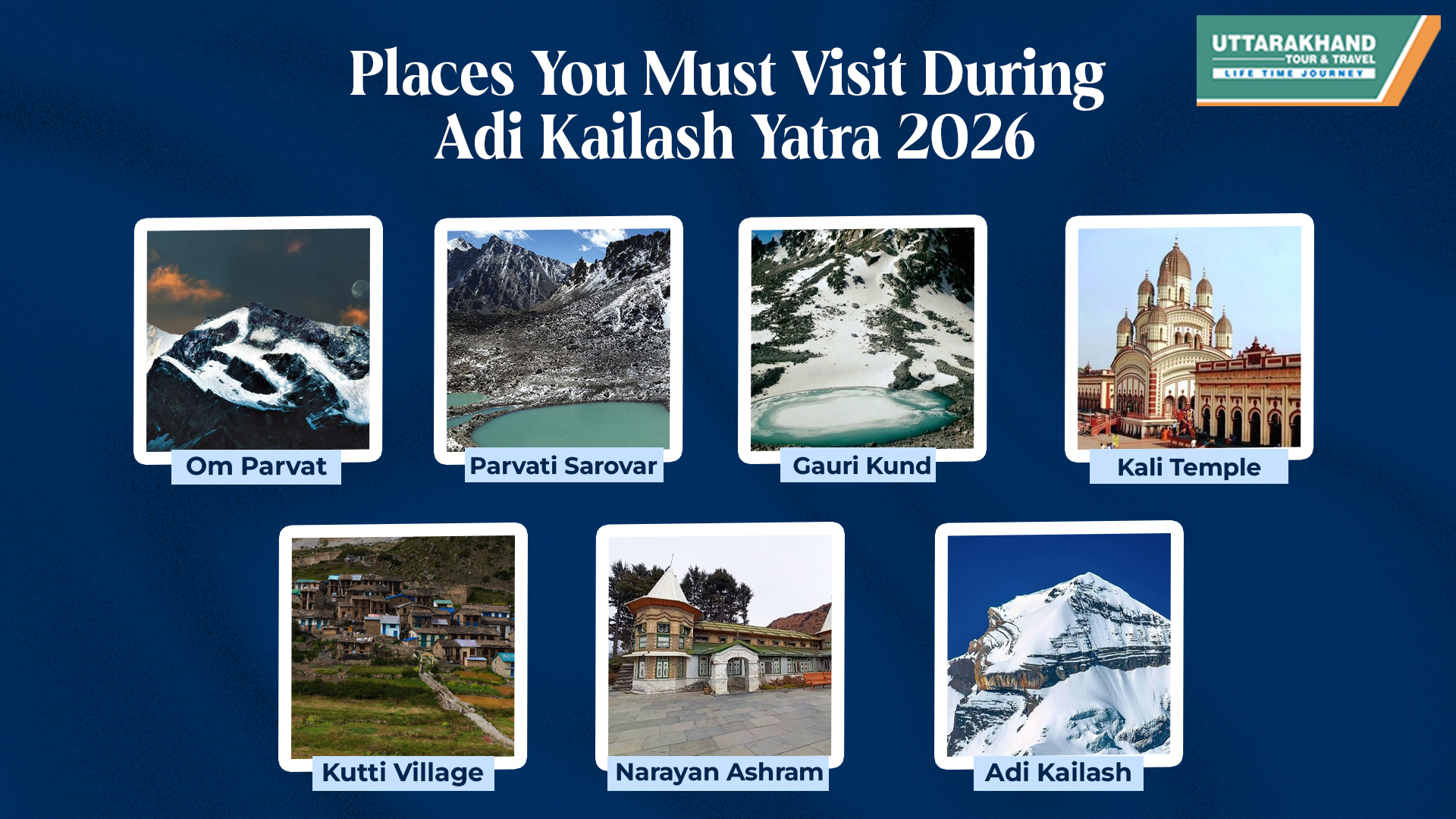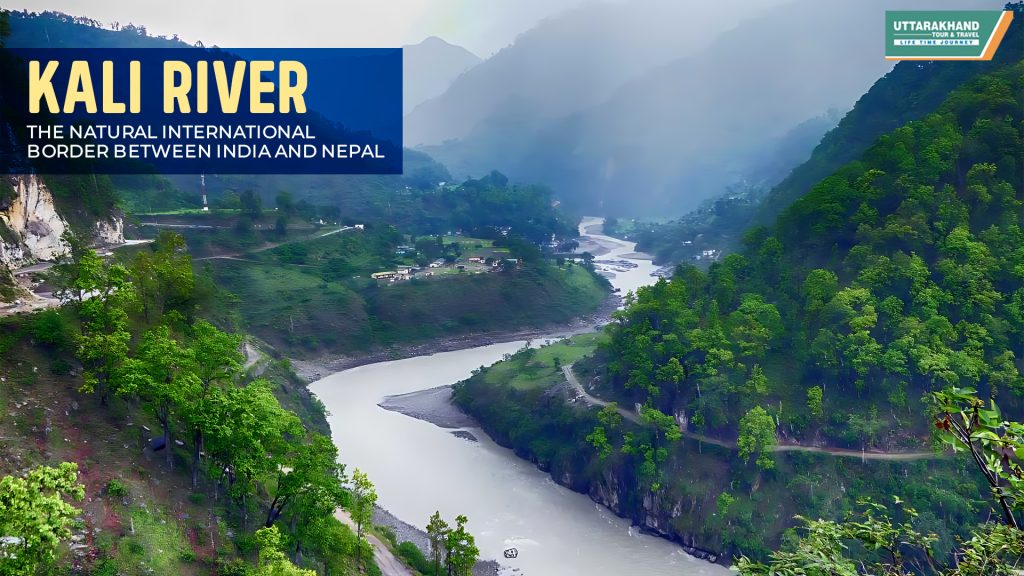
Kali Nadi or Kala Pani, on the Om Parvat route, is surrounded by pine, juniper, and Bhoj Patra trees. The mighty Himalayas are standing tall to guard this place. Kali Nadi or Kala Pani is located at 3600 meters on the route to Lipulekh Pass. Kali Nadi or Kala Pani is also known as Sharda River or Kaliganga or Mahakali. It is a great place to visit as a tourist when you are on your way to Om Parvat with a variety of flora and fauna, along with a famous temple of Kali. It is said that Sage Ved Vyas had meditated in a cave near Nag Parvat. Kali Nadi or Kala Pani is a great place to visit for all tourists. There is a small temple of Goddess Kali, for whom this river has been named. Hence, it is a great place in Uttarakhand.
The Kali Nadi in Kalapani is the boundary between India and Nepal. The Kali Nadi passes through the town of Dharchula, which is parallel to the Nepal border before exiting the mountain range. Kali Nadi meets Gori Nadi at Jauljibhi. The different tributaries of the Kali River are the Dhauli Ganga River, the Chameliya River, the Saryu River, the Ladhiya River, and the Ramgun River.
The Kali Nadi River flows mainly through the state of Uttarakhand to reach Uttar Pradesh to meet the Ghagra River, covering a distance of 350 km. The banks of the Kali River are where the major towns of the districts of Pithoragarh and Champawat lie. These include Dharchula, Jauljibhi, Pancheshwar, Jhulaghat, Tanakpur, Banbasa, among many others. The area of Champawat, which was the capital of Kumaon, is referred to as Kali Kumaon because of the Kali River.
The best way to reach Kali River is from Pithoragarh, stopping for a while at Dharchula, and then moving on to Kala Nadi, where in between you will be able to see the Nag Parvat and Kali Mandir.
Origin and Course of the Kali River
The source of the Kali River lies in the Kalapani region of the Pithoragarh district of Uttarakhand, India. This region has been a central issue of debate between India and Nepal in terms of geography and politics. Hence, it can be understood that the Kali River not only plays an important role in terms of geography but also in terms of politics.
The river flows southward from its source, acting as a border between Uttarakhand in India and Nepal. After flowing down from the mountains, it meets several rivers and then finally joins the Ghaghara River, which further forms a part of the Ganges basin.
A Natural International Boundary
One of the most defining aspects of the Kali River is its status as an international border. The Kali River has been acknowledged as a border between India and Nepal ever since the signing of the Treaty of Sugauli between British India and Nepal.
As per this treaty, the Kali River was declared to be the western boundary of Nepal. However, there have been instances of confusion regarding the exact source of the Kali River, leading to border disputes, especially in the region of Kalapani. Nevertheless, the Kali River remains a symbol of the geographical and cultural association between India and Nepal.
Cultural and Spiritual Importance
The Kali River is not only a political boundary but is also highly revered in the traditions and practices of the people. In many places in Uttarakhand and Nepal, the river is considered sacred and is often linked with Goddess Kali.
The river is also an important entity for people who live in the bordering areas. The river is used for agricultural practices, fishing, etc. The people in the region often practice rituals and make prayerful requests to the river during special occasions.
Biodiversity and Natural Beauty
Passing through the pristine environment of the Himalayas, the Kali River is located in a region of rich biodiversity. The forests, valleys, and wildlife make the area ecologically important. The river basin is a habitat for a variety of species of flora and fauna, many of which are endemic to the region.
The Kali River is a haven for nature lovers and adventure seekers. The scenic beauty of the Kali River is breathtaking. River rafting is a popular adventure sport on the river. The untouched beauty of the Kali River is a hidden paradise for travelers.
Geopolitical Significance
The strategic value of the Kali River cannot be overstated. The river plays a significant role in setting territorial boundaries. There are changes in the perceived origin of the river that affect territorial boundaries.
The Kalapani-Lipulekh area, where the river originates, has been a contentious issue between India and Nepal. Both countries have held diplomatic talks to resolve these issues amicably. Despite occasional strains in their relationship, India and Nepal have a strong cultural and economic relationship. The river represents both division and unification.
Adventure and Tourism Potential
Apart from its political and cultural value, the Kali River has tremendous potential for tourism. The scenic beauty of the surrounding area is part of the attraction for trekkers, pilgrims, and adventure enthusiasts.
The popular trekking routes in the area are part of the trekking expeditions undertaken for destinations like Kailash Mansarovar and Adi Kailash. The scenic beauty of the Kali River, along with the spiritual attractions in the surrounding area, makes the Kali River a part of the tourism potential in the area.
River rafting is yet another adventure sport undertaken in the area.
Environmental Importance
Similar to most rivers in the Himalayas, the Kali River is a vital component in maintaining ecological balance. It helps in supporting agriculture, recharging groundwater, and providing biodiversity in the region.
Environmental problems, such as climate change, deforestation, and unregulated development, are a threat to the Kali River. Conservation of this resource is therefore important.
Conclusion
The Kali River is an important reminder of the role of nature in shaping not only landscapes but also political boundaries or even cultural identities.
The Kali River is a natural international border between India and Nepal. As such, it has historical, spiritual, and even ecological importance.
The Kali River, from its origins in the Himalayas to its passage through many different landscapes, has been a river that unites people, traditions, and nations. As a border or even a bridge, the river has been an important symbol of coexistence.
FAQs
1. Where is the Kali River located?
The Kali River flows along the border of Uttarakhand (India) and western Nepal, acting as a natural international boundary between the two countries.
2. Why is the Kali River important?
The river is important because it serves as the official boundary between India and Nepal, as defined by the Treaty of Sugauli.
3. What is another name for the Kali River?
The Kali River is also known as the Mahakali River in Nepal and the Sharda River in India.
4. Where does the Kali River originate?
The river originates near the Kalapani region in the Pithoragarh district of Uttarakhand, close to the India–Nepal border.
5. Is there any dispute related to the Kali River?
Yes, there have been disputes between India and Nepal regarding the exact origin of the river, particularly in the Kalapani-Lipulekh region.
6. Can tourists visit areas near the Kali River?
Yes, certain areas near the river are accessible to tourists, especially in Uttarakhand. However, some border regions may require special permits.