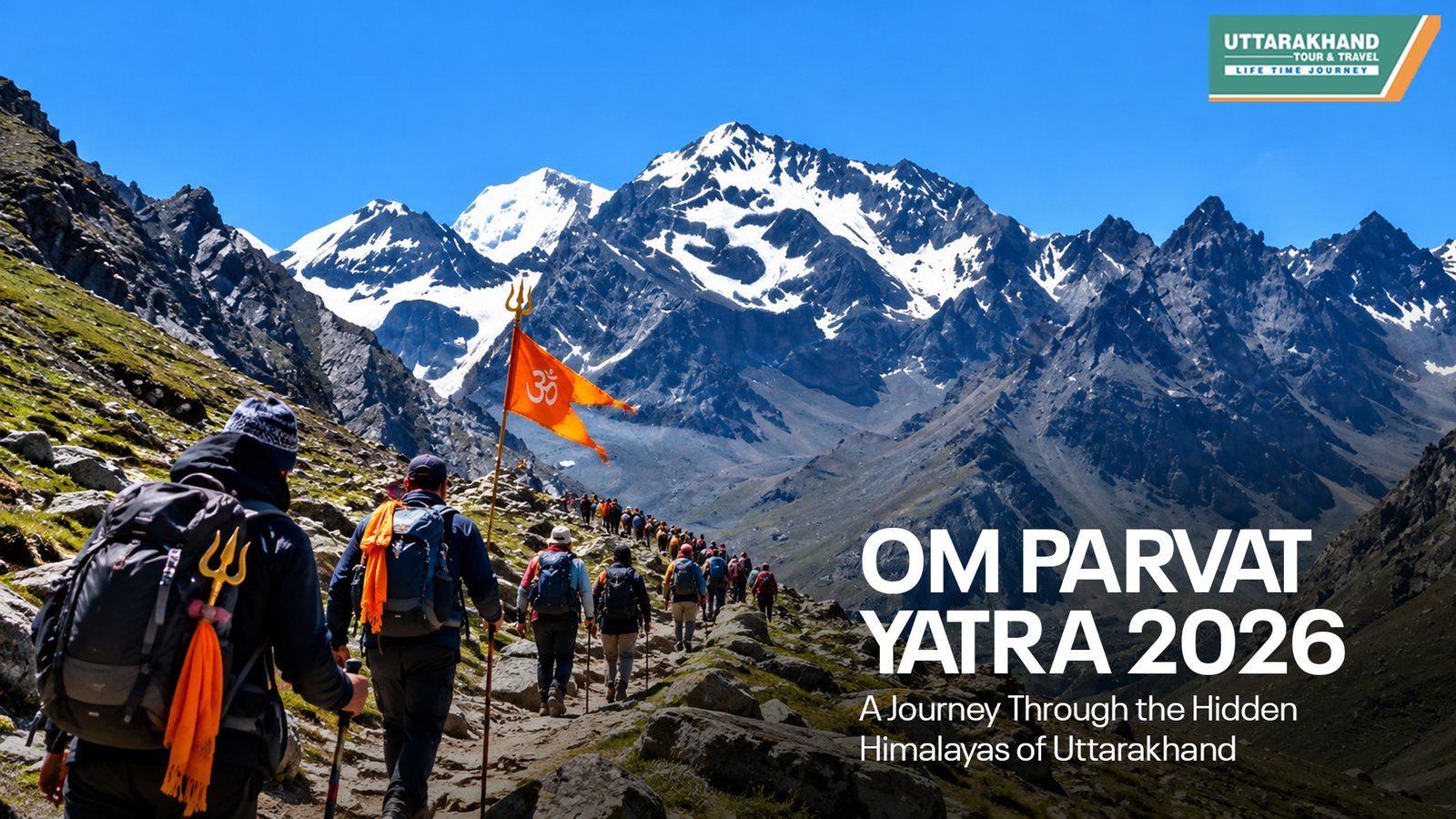

The Adi Kailash Yatra is much more than a pilgrimage to a sacred mountain. As you travel deeper into the remote Himalayas of Uttarakhand, the route reveals spectacular valleys, ancient villages, sacred water sources, high-altitude landscapes, and places where spirituality and nature exist together.
For first-time pilgrims, Adi Kailash and Om Parvat are naturally the main attractions. However, some of the most memorable experiences can come from the lesser-known stops along the route.
As experienced Adi Kailash travel specialists, we believe that understanding these destinations makes the journey more meaningful. Here are some of the remarkable places to explore during your Adi Kailash Yatra.
Uttarakhand Tour & Travels helps pilgrims plan their Himalayan journey with well-organized itineraries, transportation, accommodation, permit guidance, and on-ground assistance.
1. Chialekh Valley – A Beautiful Himalayan Meadow
Chialekh is one of the scenic stretches encountered on the journey toward the higher Himalayan region.
The landscape changes dramatically here. Green alpine meadows, dramatic mountain slopes, flowing streams, and fresh mountain air create a peaceful environment for travellers.
For photographers, Chialekh can be especially rewarding because the scenery changes with the season and weather.
2. Garbyang – A Historic Himalayan Settlement
Garbyang is one of the traditional settlements of the Vyas Valley and is known for its distinctive mountain setting and cultural history.
The village offers travellers a glimpse into the lifestyle of communities that have lived in this challenging Himalayan environment for generations.
Its traditional surroundings make it an interesting stop for travellers interested in Himalayan culture and history.
3. Gunji – The Gateway to the Sacred Route
Gunji is one of the most important settlements on the Adi Kailash route.
Located near the confluence of Himalayan rivers, the village provides a spectacular mountain setting and serves as an important base for journeys toward Adi Kailash and Om Parvat.
For pilgrims, Gunji is also significant because it provides an opportunity to rest and acclimatize before continuing to higher elevations.
The evenings in Gunji can be particularly memorable, with clear skies, cold mountain air, and dramatic Himalayan surroundings.
4. Kuti Village – Experience Traditional Himalayan Life
Kuti is one of the remote villages associated with the Adi Kailash region.
Away from conventional tourist destinations, Kuti gives travellers an opportunity to observe traditional Himalayan life and experience the simplicity of mountain communities.
The surrounding landscape is equally impressive, with towering peaks, valleys, streams, and open mountain terrain.
For cultural travellers, Kuti can be one of the most rewarding stops on the journey.
5. Kala Pani – The Sacred Source of the Kali River
Kala Pani is both spiritually significant and geographically fascinating.
The area is associated with the source of the Kali River, and pilgrims commonly visit the sacred Kali Temple located here.
The combination of a sacred site, flowing Himalayan water, and dramatic mountain scenery makes Kala Pani a memorable stop.
For many pilgrims, this is a place to pause, pray, and reflect before continuing toward the higher pilgrimage destinations.
6. Parvati Kund – A Serene Sacred Lake
Among the most spiritually significant places near Adi Kailash is Parvati Kund, also known as Parvati Sarovar.
The peaceful lake surrounded by high Himalayan mountains creates an extraordinary atmosphere.
According to Hindu tradition, the location is associated with Goddess Parvati. Pilgrims visit the area to offer prayers and experience its tranquil surroundings.
The reflection of the surrounding mountains in the water can make the experience especially beautiful when weather conditions are clear.
7. Jolingkong – The Base Area of Adi Kailash
Jolingkong is an important destination for pilgrims visiting Adi Kailash.
As you approach this region, the landscape becomes increasingly rugged and dramatic. High mountain slopes, sparse vegetation, cold winds, and the immense scale of the Himalayas remind travellers that they are entering a remote high-altitude environment.
From here, pilgrims proceed toward the sacred Adi Kailash area according to their itinerary and local conditions.
8. Nabidhang – The Viewpoint for Om Parvat
Nabidhang is one of the most anticipated points of the journey because it provides an important viewing area for Om Parvat.
The naturally occurring snow formation resembling the sacred ॐ symbol is one of the extraordinary sights associated with the pilgrimage.
Weather conditions play an important role in visibility, so pilgrims should understand that mountain views can change rapidly.
9. Kali River Valley – Follow the River Through the Himalayas
The journey through the Kali River valley is itself an experience.
For significant portions of the route, travellers encounter the river flowing through deep Himalayan terrain. The sound of flowing water, steep mountain walls, and remote settlements create a landscape very different from India’s conventional tourist destinations.
The valley also provides an opportunity to understand how closely Himalayan communities have historically lived alongside rivers and mountains.
10. Traditional Himalayan Villages
One of the biggest hidden treasures of the Adi Kailash journey is the villages themselves.
Instead of looking only for famous landmarks, observe:
- Traditional homes
- Local architecture
- Mountain farming practices
- Prayer flags and shrines
- Local food
- Traditional clothing
- Everyday life in remote Himalayan communities
These experiences often become some of the most authentic memories of the pilgrimage.
Why These Hidden Gems Matter
The true character of the Adi Kailash Yatra is revealed gradually.
The journey is not simply:
Dharchula → Adi Kailash → Return
It is a progression through valleys, rivers, villages, sacred sites, and increasingly remote Himalayan landscapes.
Every stop adds another layer to the experience.
Some places provide spiritual significance. Others offer spectacular scenery. Some introduce pilgrims to local culture, while others provide moments of silence and reflection.
Together, they make the Adi Kailash Yatra much more than a conventional sightseeing trip.
Travel Tips for Exploring These Places
Because this is a remote high-altitude region, pilgrims should travel responsibly.
1. Follow the Official Itinerary
Access to certain border areas can depend on permits, security requirements, road conditions, and local administration. Always follow the instructions of your tour operator and local authorities.
2. Allow Time for Acclimatization
Do not treat the journey like a race. Spending adequate time at intermediate locations can help your body adjust to increasing altitude.
3. Respect Local Culture
These villages are people’s homes, not tourist attractions. Ask permission before photographing residents, homes, or religious activities.
4. Protect the Environment
Carry your waste back with you and avoid disturbing the fragile Himalayan ecosystem.
5. Be Prepared for Changing Weather
Clear skies can quickly turn into clouds, rain, or cold conditions. Carry appropriate layers and essential personal supplies.
Best Time to Explore the Adi Kailash Route
The pilgrimage season is generally concentrated during the months when routes and border areas are accessible, but exact opening dates and access conditions can change from year to year.
May–June can offer a different Himalayan landscape from the post-monsoon period of September–October. Weather, road conditions, snowfall, and local administrative decisions should always be checked before travelling.
Final Thoughts
The Top Hidden Gems of the Adi Kailash Yatra are not necessarily places with large tourist facilities or famous viewpoints. Their appeal lies in their remoteness, spirituality, culture, and untouched Himalayan character.
From the peaceful landscapes of Chialekh to the traditional villages of the Vyas Valley, from sacred Kala Pani to serene Parvati Kund, each destination contributes something unique to the pilgrimage.
And perhaps that is what makes the Adi Kailash journey so special: the destination is sacred, but the entire journey is an experience.
Plan Your Adi Kailash Yatra
For information about Adi Kailash, Om Parvat, Parvati Kund, Kailash Mansarovar Yatra with Uttrakhand Tour and Travels, itineraries, travel arrangements, and pilgrimage assistance, visit:
Contact Us
Phone: +91 96347 55026
Pithoragarh Office:
Bara Pathar Road, Siltham, Pithoragarh, Uttarakhand – 262501
Pune Office:
Prestige Chambers, J. M. Road, Deccan, Pune – 411004
FAQs
Q1. What are the hidden gems of the Adi Kailash Yatra?
Chialekh, Garbyang, Gunji, Kuti, Kala Pani, Parvati Kund, Jolingkong, and the landscapes around Nabidhang are among the notable stops and attractions.
Q2. Is Gunji important during the Adi Kailash Yatra?
Yes, Gunji is an important settlement and base area for travellers proceeding toward Adi Kailash and Om Parvat.
Q3. Why is Kala Pani significant?
Kala Pani is associated with the source region of the Kali River and is an important spiritual stop on the pilgrimage route.
Q4. What is special about Parvati Kund?
Parvati Kund is a sacred high-altitude lake associated with Goddess Parvati and is valued for both its spiritual significance and Himalayan setting.
Q5. Can pilgrims visit every location on the route?
Access can depend on permits, security restrictions, weather, road conditions, and local administrative instructions, so pilgrims should follow their approved itinerary and current local guidance.