
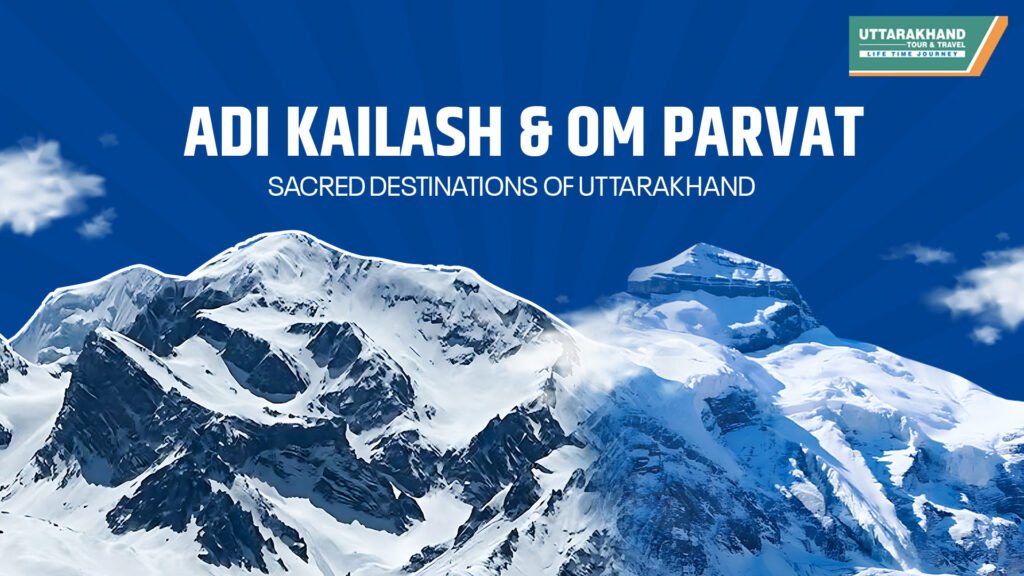
Tucked away in the remote Kumaon Himalayas of Uttarakhand, Adi Kailash and Om Parvat are two of India’s most revered yet lesser-explored pilgrimage sites. Often called “Chhota Kailash” or “Little Kailash,” this region offers pilgrims and trekkers a spiritual experience that rivals the far more difficult Mount Kailash Mansarovar Yatra in Tibet — without the need for a foreign visa or Chinese permits.
For devotees of Lord Shiva, travelers seeking Himalayan solitude, or anyone drawn to India’s high-altitude sacred geography, Adi Kailash and Om Parvat deserve a place at the top of the bucket list.
Where Are Adi Kailash and Om Parvat?
Both destinations lie in the Pithoragarh district of Uttarakhand, close to the India-Tibet (China) border, along the historic route once used by traders and pilgrims traveling toward Mansarovar. The journey typically begins from Delhi or Kathgodam and passes through Dharchula, Tawaghat, Ghatiabagarh, and on toward Gunji, Nabhidhang, and the Lipulekh Pass area — a route now made significantly more accessible thanks to newly constructed roads.
The region sits at elevations ranging from around 3,000 to over 5,000 meters, so the landscape shifts dramatically along the way — from pine forests and river valleys to stark alpine terrain and snow-capped peaks.
Adi Kailash: The “Chhota Kailash”
Adi Kailash, standing at approximately 6,191 meters, bears a striking resemblance to the actual Mount Kailash in Tibet, which is why it has earned the nickname “Chhota Kailash.” Hindu mythology holds that this peak is one of the abodes of Lord Shiva, and many pilgrims who cannot undertake the arduous and expensive Kailash Mansarovar Yatra choose Adi Kailash as a spiritually significant alternative.
Near the base of the mountain lies Parvati Sarovar (also known as Gauri Kund), a serene lake believed to be associated with Goddess Parvati. The combination of the sacred peak and the tranquil lake makes this one of the most photogenic and spiritually charged spots in the entire Himalayan belt.
Om Parvat: Nature’s Own ॐ
A short distance from Adi Kailash lies Om Parvat, a mountain famous for the naturally occurring snow pattern on its face that forms the shape of the sacred “ॐ” (Om) symbol. This natural phenomenon, caused by the way snow settles into the mountain’s rock crevices, has made Om Parvat one of the most photographed and spiritually significant peaks in India.
Pilgrims often describe the first sight of Om Parvat as an emotional, almost surreal moment — a natural symbol of the divine appearing on a remote Himalayan peak, visible only when weather and snow conditions align.
The Yatra Route and Journey Experience
The Adi Kailash and Om Parvat Yatra is typically completed over 6 to 11 days, depending on the chosen itinerary — some routes start and end in Delhi, others from Kathgodam or Dharchula, and longer versions include treks to Panchachuli Glacier or via Sinla Pass.
Along the way, travelers pass through:
- Kuti Village – one of the last inhabited villages before the high-altitude zone
- Kalapani – a scenic and historically significant stop near the border
- Jageshwar Dham and Patal Bhuvaneshwar – ancient temple complexes often included in extended itineraries
- Kali River Valley – offering dramatic gorge and waterfall views
Most tour operators provide permits, government-certified guides, vegetarian meals, and homestay or guesthouse accommodation, since the region requires special travel authorization due to its proximity to the international border.
Best Time to Visit
The ideal window for the Adi Kailash Om Parvat Yatra is from May to October, when mountain passes are clear of heavy snow and roads remain accessible. September and October are particularly popular, offering crisp skies and excellent visibility of both peaks. Temperatures during the season typically range from 2°C to 15°C, dropping below freezing at night, so proper cold-weather gear is essential.
Who Can Undertake the Yatra?
This is a high-altitude journey (reaching elevations above 4,000 meters in places), so a basic level of fitness and a medical fitness certificate are generally required. Most operators accept travelers between the ages of 10 and 80, provided there are no serious heart or respiratory conditions. A valid government ID, such as an Aadhaar card, along with passport-size photographs, is typically needed for permits.
Why Adi Kailash and Om Parvat Deserve a Spot on Your Travel List
- Spiritual significance without the logistical complexity of an international Kailash Mansarovar trip
- Untouched Himalayan scenery — glaciers, alpine meadows, and river valleys far from crowded tourist circuits
- Cultural immersion with the Chaudans and Byans valley communities along the route
- A genuine sense of discovery, since the region only opened up more widely to travelers in recent years with improved road access
Whether you’re a devout pilgrim seeking Shiva’s abode, a photographer chasing the natural Om symbol, or a traveler craving remote Himalayan landscapes, Adi Kailash and Om Parvat offer a journey that is equal parts adventure and devotion.
Ready to Begin Your Adi Kailash & Om Parvat Yatra?
Adi Kailash and Om Parvat aren’t just destinations — they’re a once-in-a-lifetime spiritual journey. Let Uttarakhand Tour & Travel, government-registered and trusted by pilgrims for over 24 years, handle every detail of your yatra: permits, guides, stays, meals, and transport — so all you need to focus on is the journey.
📞Call us:+91 9634755026
💬WhatsApp us:Chat Now
🌐Explore packages:adikailashmansarovar.com
👉 Book Your Adi Kailash Om Parvat Yatra 2026 Today — Limited Departures Available!
Fixed departures running September–October 2026. Secure your seat now and take the first step toward Chhota Kailash and the sacred ॐ of Om Parvat.
Frequently Asked Questions
1. What is the difference between Adi Kailash and Mount Kailash (Tibet)?
Adi Kailash, also called Chhota Kailash, is located within India in Uttarakhand’s Pithoragarh district and does not require a foreign visa or Chinese permits. Mount Kailash in Tibet requires international travel documentation, making Adi Kailash a more accessible alternative for many pilgrims.
2. How many days does the Adi Kailash Om Parvat Yatra take?
Depending on the starting point and itinerary, the yatra can range from 4 days (Dharchula to Dharchula) to 10-11 days for extended routes that include Panchachuli Glacier or Sinla Pass treks.
3. What is the best season to visit Om Parvat and Adi Kailash?
The best season is from May to October, with September and October offering some of the clearest mountain views. Winter months are avoided due to heavy snowfall and road closures.
4. Is the Adi Kailash Yatra difficult for beginners?
It is considered a moderate to challenging high-altitude journey, generally rated around Trip Grade 4, with elevations reaching over 4,000 meters. A medical fitness certificate and reasonable physical fitness are usually required.
5. What documents are needed for the yatra?
Travelers typically need a valid government-issued photo ID (such as an Aadhaar card), passport-size photographs, and a medical fitness certificate, since the route falls near the India-Tibet border and requires special permits.