
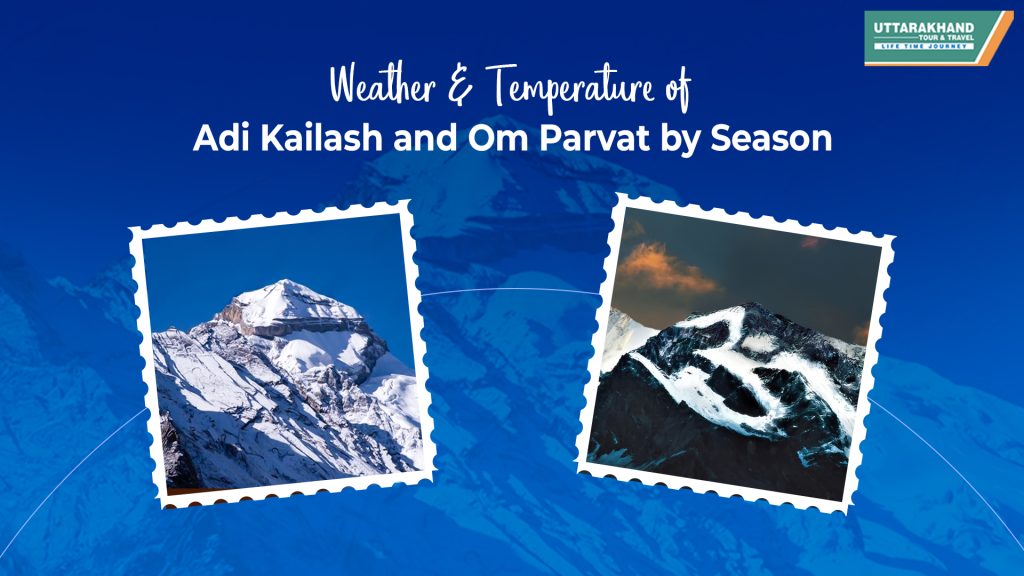
High in the Kumaon Himalayas of Uttarakhand, near the Indo-Tibetan border, lie two sacred wonders — Adi Kailash (Chhota Kailash) and Om Parvat. These destinations are not only spiritually powerful but also geographically extreme. Because of their high altitude, remote terrain, and proximity to the Tibetan plateau, the weather here changes quickly and can feel unpredictable for travelers.
Understanding the seasonal temperature and climate conditions is essential before planning the Adi Kailash Yatra. Pilgrims who prepare for the weather properly experience the journey peacefully, while those unaware often struggle with cold, altitude, and sudden climate shifts.
Why Weather Matters in Adi Kailash Yatra
Adi Kailash stands at approximately 5,945 meters (19,505 ft) while Om Parvat viewpoint areas such as Nabidhang lie above 4,200 meters. At these elevations:
- Oxygen levels drop significantly
- Sun feels intense but air remains cold
- Temperature swings between day and night are extreme.
- Snowfall and landslides can affect routes.
Even during summer, temperatures can fall below freezing at night. Therefore, choosing the correct season is more important than choosing the itinerary.
Seasonal Temperature Guide
1. Summer Season (May – June)
Average Temperature:
Day: 8°C to 18°C
Night: -2°C to 5°C
This is the start of the pilgrimage season and considered the best time for most yatris.
Weather Conditions
- Snow begins melting
- Roads gradually open
- Clear mountain views
- Pleasant daytime trekking weather
However, nights remain freezing. Many pilgrims are surprised when water freezes inside bottles after sunset.
Why Visit Now
- Stable climate
- Good visibility of Om symbol on Om Parvat
- Comfortable acclimatization period
This is ideal for senior citizens and first-time high-altitude travelers.
2. Monsoon Season (July – August)
Average Temperature:
Day: 6°C to 15°C
Night: 0°C to 6°C
The mountains turn lush and beautiful, but travel becomes challenging.
Weather Conditions
- Frequent rainfall in lower valleys (Dharchula, Tawaghat)
- Foggy mountain views
- Landslide-prone roads
- Cloud cover hides Om Parvat frequently
Although temperatures are slightly warmer than early summer nights, the humidity and road conditions make travel unpredictable.
Important Note
Helicopter and vehicle movement may get delayed due to weather windows.
3. Post-Monsoon / Autumn (September – October)
Average Temperature:
Day: 5°C to 14°C
Night: -5°C to 2°C
This is considered the most beautiful season for Adi Kailash darshan.
Weather Conditions
- Crystal-clear skies
- Sharp mountain visibility
- Best photography opportunities
- Minimal rainfall
The Om symbol on Om Parvat appears the clearest during this period because fresh snow settles on the rock face.
Challenge
Cold becomes intense at night, especially at Gunji and Nabidhang camps.
4. Winter Season (November – April)
Average Temperature:
Day: -5°C to 5°C
Night: -15°C to -5°C
The region remains completely inaccessible due to heavy snowfall.
Weather Conditions
- Roads closed
- Villages evacuated
- Temperatures far below freezing
- Thick snow layers
No yatra operations run during this period.
Month-Wise Temperature Snapshot
| Month | Temperature Range | Travel Suitability |
| May | 5°C to 15°C | Excellent |
| June | 8°C to 18°C | Best |
| July | 7°C to 14°C | Moderate (Rain Risk) |
| August | 6°C to 13°C | Moderate |
| September | 5°C to 14°C | Excellent |
| October | -2°C to 10°C | Good but Cold |
| Nov–April | -15°C to 5°C | Closed |
Day vs Night Temperature Difference
One of the most surprising aspects of Adi Kailash climate is the temperature drop after sunset.
A sunny afternoon at 14°C can become -3°C within hours. This happens because high-altitude regions lose heat quickly once sunlight disappears.
So pilgrims should never judge the weather only by daytime comfort.
Final Thoughts
Adi Kailash and Om Parvat are not ordinary tourist spots — they are high Himalayan spiritual realms where nature decides the schedule. The mountains may appear calm, but their weather is powerful and ever-changing.
Pilgrims who understand seasonal temperature patterns enjoy not only a safer journey but also a deeper spiritual connection. When prepared properly, the cold winds, icy nights, and golden sunrise over Adi Kailash become part of a once-in-a-lifetime divine experience.
Planning your yatra according to the weather is therefore not just practical — it is the key to a peaceful darshan.
Need to know more about Adi Kailash then contact us at +91 9634755026 and get further guidance.
Explore more adventures — follow us on Instagram