🔹 A Renewed Diplomatic Tone
During his official visit to China, External Affairs Minister Dr. S. Jaishankar highlighted a “steady improvement” in India–China relations over the past nine months. He met with Chinese Vice President Han Zheng and Foreign Minister Wang Yi, emphasizing that resolving the ongoing border friction remains the key to restoring full trust.
Jaishankar’s message was clear: peace and tranquility at the Line of Actual Control (LAC) are essential for rebuilding mutual confidence and ensuring broader cooperation in trade, regional security, and cultural ties.
“It is in our mutual interest to find a way forward based on mutual respect, sensitivity, and interest,” he said, underlining India’s diplomatic stance.
Jaishankar’s message was clear: peace and tranquility at the Line of Actual Control (LAC) are essential for rebuilding mutual confidence and ensuring broader cooperation in trade, regional security, and cultural ties.
“It is in our mutual interest to find a way forward based on mutual respect, sensitivity, and interest,” he said, underlining India’s diplomatic stance.
🔹 Kailash Mansarovar Yatra: A Symbolic Resumption
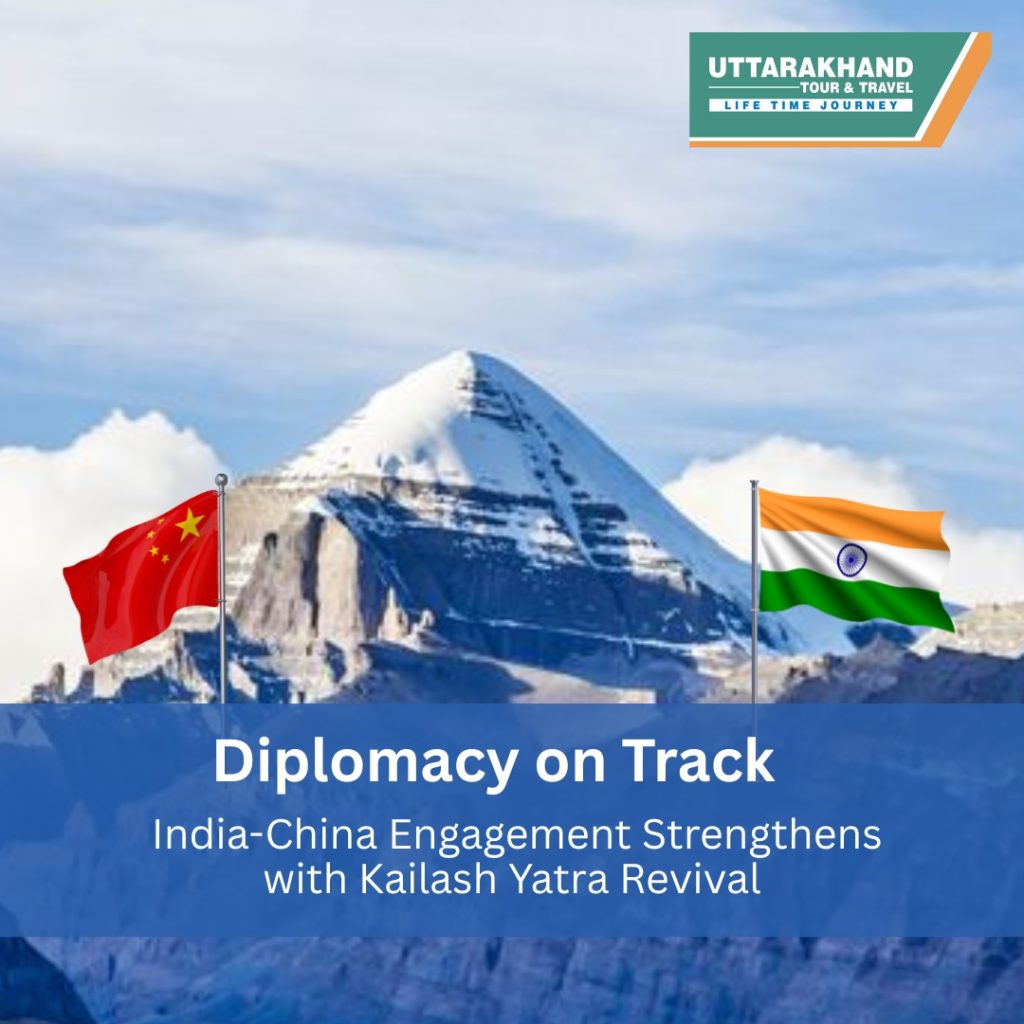
One of the most remarkable takeaways from Jaishankar’s visit was his praise for the resumption of the Kailash Mansarovar Yatra, a sacred pilgrimage deeply revered by Hindus, Buddhists, and Jains alike. The yatra had been suspended for over five years due to COVID-19 and tense border conditions.
The restart of this spiritual journey is more than just a religious milestone; it’s a gesture of trust and cooperation. The first batch of 45 Indian pilgrims successfully crossed the Lipulekh Pass into Tibet in early July 2025. Road clearance and safety arrangements were jointly coordinated, reflecting improved operational synergy between the two countries.
The restart of this spiritual journey is more than just a religious milestone; it’s a gesture of trust and cooperation. The first batch of 45 Indian pilgrims successfully crossed the Lipulekh Pass into Tibet in early July 2025. Road clearance and safety arrangements were jointly coordinated, reflecting improved operational synergy between the two countries.
🔹 Soft Diplomacy at Work
The resumption of the yatra carries immense soft power implications. It symbolizes:
Cultural respect between India and China
People-to-people connectivity, fostering goodwill beyond politics
Revival of traditional routes and ancient ties through modern diplomacy
While hard issues like de-escalation at the border and trade imbalances remain under discussion, the yatra shows that trust-building steps are possible, even in strained times.
🔹 Challenges Ahead, but Hope Persists
Despite the positive tone, both nations recognize the work ahead. India continues to push for complete disengagement from friction points and urges China to remove obstacles in trade and border logistics.
Yet, this dialogue – and the success of the Kailash Yatra – sets the stage for a broader reset in India-China ties. It shows that when diplomacy aligns with cultural understanding, meaningful progress is possible.
Yet, this dialogue – and the success of the Kailash Yatra – sets the stage for a broader reset in India-China ties. It shows that when diplomacy aligns with cultural understanding, meaningful progress is possible.
🌏 Conclusion
The road to normalized India–China relations is long and complex. But as Jaishankar’s visit and the revival of the Kailash Mansarovar Yatra demonstrate, dialogue and cultural diplomacy are keeping that road open.
This isn’t just about geopolitics — it’s about respecting shared histories, enabling spiritual journeys, and building a future rooted in cooperation.
This isn’t just about geopolitics — it’s about respecting shared histories, enabling spiritual journeys, and building a future rooted in cooperation.