Introduction
Mount Kailash and Lake Mansarovar are two such sites located in the distant Trans-Himalaya area, which have been attracting pilgrims, saints, and devotees for centuries. These sites are considered sacred by different religious traditions and are one of the most sacred pilgrimage spots in the entire world.
Every year, thousands of devotees undertake the challenging Kailash Mansarovar Yatra to experience the spiritual energy of this sacred region. For many pilgrims, the journey is not merely a physical expedition but a transformative path of faith, devotion, and self-discovery.
As professionals guiding pilgrims through Himalayan spiritual journeys, we have witnessed firsthand how the sacred presence of Mount Kailash and Lake Mansarovar leaves a lasting impact on every visitor.
Mount Kailash: The Abode of Lord Shiva
In Hinduism, Mount Kailash is revered as the eternal residence of Lord Shiva and Goddess Parvati. Unlike other mountains that climbers attempt to conquer, Mount Kailash remains unclimbed and untouched out of deep religious respect.
Ancient scriptures describe Kailash as the cosmic center of the universe, a divine axis connecting heaven, earth, and the spiritual realm.
Pilgrims believe that merely witnessing Mount Kailash can bring spiritual blessings, while completing the sacred Kailash Parikrama helps cleanse accumulated karma and bring one closer to liberation.
Standing before the majestic black-rock pyramid of Kailash, many devotees experience an overwhelming sense of peace, humility, and devotion.
The Sacred Origin of Four Great Rivers
One of the reasons Mount Kailash holds extraordinary importance is its geographical significance.
The region surrounding Kailash is associated with the origins of four major rivers:
- Indus River.
- Brahmaputra River.
- Sutlej River.
- Karnali River.
For centuries, these rivers have sustained civilizations across Asia, making Kailash not only a spiritual center but also a life-giving source for millions of people.
This remarkable connection between nature and spirituality further strengthens the mountain’s sacred status.
Lake Mansarovar: The Lake Created by Lord Brahma
Located near Mount Kailash, Lake Mansarovar is considered one of the holiest freshwater lakes in the world.
According to Hindu mythology, Lord Brahma conceived the lake in his mind before manifesting it on Earth. The Sanskrit word “Mansarovar” originates from:
- Manas = Mind
- Sarovar = Lake
Thus, Mansarovar is often referred to as the “Lake of Consciousness” or the “Lake Born from the Mind of Brahma.”
Pilgrims believe that bathing in the sacred waters helps purify sins accumulated over many lifetimes and grants spiritual merit.
A Sacred Destination for Multiple Religions
The significance of Kailash and Mansarovar extends far beyond Hinduism.
Hinduism
Mount Kailash is the abode of Lord Shiva and Goddess Parvati.
Buddhism
Buddhists identify Mount Kailash as Mount Meru and associate it with Buddha Demchok, representing supreme bliss.
Jainism
Jains believe that the first Tirthankara, Rishabhadeva, attained liberation near Mount Kailash.
Bon Religion
Followers of the ancient Bon tradition consider Kailash the center of spiritual power and the seat of divine energies.
This unique reverence across multiple faiths makes Kailash one of the few pilgrimage sites respected worldwide.
The Spiritual Power of Kailash Parikrama
One of the most important rituals of the Kailash Mansarovar Yatra is the Kailash Parikrama, a trek of approximately 52 kilometers around the sacred mountain.
Pilgrims undertake this journey with immense faith and devotion.
According to spiritual traditions:
- One Parikrama cleanses the sins of a lifetime.
- Multiple Parikramas bring greater spiritual merit.
- The journey symbolizes the cycle of life, death, and rebirth.
Many pilgrims describe the Parikrama as the most challenging yet rewarding experience of their lives.
Why Pilgrims Feel a Unique Energy at Kailash
Over the years, countless travelers have reported feeling a profound spiritual presence around Mount Kailash and Lake Mansarovar.
Some experience:
- Deep inner peace.
- Emotional healing.
- Heightened awareness.
- A stronger connection with nature.
- Renewed faith and devotion.
While science may explain part of the experience through the remote Himalayan environment, devotees firmly believe that the sacred energy of Kailash transcends ordinary understanding.
The Reflection of Kailash in Mansarovar
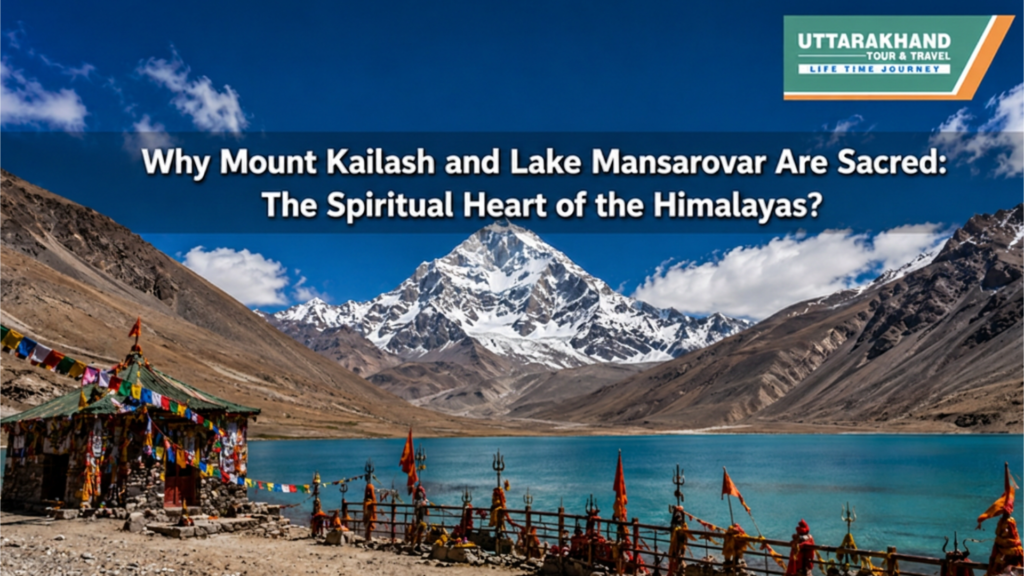
One of the most breathtaking moments during the yatra occurs when pilgrims witness the reflection of Mount Kailash in the crystal-clear waters of Lake Mansarovar.
This extraordinary sight symbolizes:
- Unity of body and soul.
- Reflection of the divine within oneself.
- Harmony between nature and spirituality.
For many visitors, this becomes the defining moment of the pilgrimage.
A Journey of Transformation
The Kailash Mansarovar Yatra is often described as a life-changing experience.
The combination of:
- Sacred mythology.
- Majestic Himalayan landscapes.
- Ancient spiritual traditions.
- Personal devotion.
creates a journey unlike any other in the world.
Pilgrims frequently return home with a renewed perspective on life, stronger faith, and a deeper appreciation for spiritual values.
Conclusion
Mount Kailash and Lake Mansarovar are sacred because they represent far more than physical destinations. They symbolize divine presence, spiritual awakening, purity, and the eternal quest for enlightenment.
Whether viewed through the lens of religion, mythology, or personal spirituality, the sacred region continues to inspire millions of devotees from worldwide.
For those seeking a profound spiritual experience, few journeys compare to the timeless pilgrimage of Kailash Mansarovar.
FAQs
1. Why is Mount Kailash considered sacred?
Mount Kailash is believed to be the divine abode of Lord Shiva and is revered by Hindus, Buddhists, Jains, and Bon followers.
2. What is the significance of Lake Mansarovar?
Lake Mansarovar is believed to have been created by Lord Brahma and is considered one of the holiest lakes in the world.
3. Can pilgrims climb Mount Kailash?
No, Mount Kailash remains unclimbed due to its immense religious significance.
4. What is Kailash Parikrama?
Kailash Parikrama is the sacred circumambulation of Mount Kailash performed by pilgrims seeking spiritual blessings.
5. Why do pilgrims bathe in Lake Mansarovar?
Pilgrims believe that bathing in the holy waters helps purify sins and brings spiritual merit.